What makes this ground worth investigating
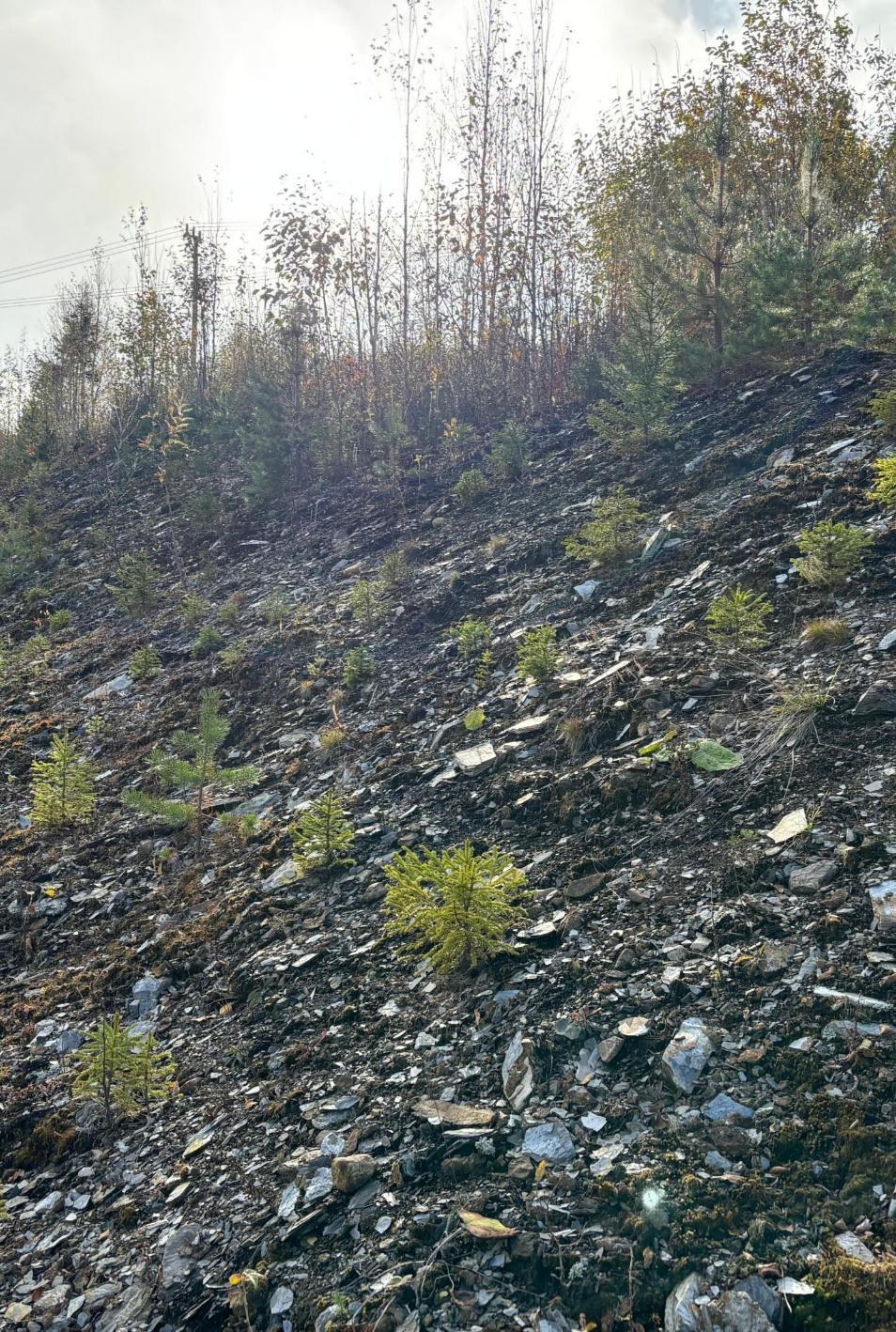
The Swedish Alum Shale Formation is among the most uraniferous black shale units in the world. At Vilhelmina, a locally present uraniferous phosphoritic sandstone directly overlies it. In northern Sweden, folding, tectonic duplication and low-grade metamorphism during the Caledonian Orogeny remobilised uranium to form uraninite.
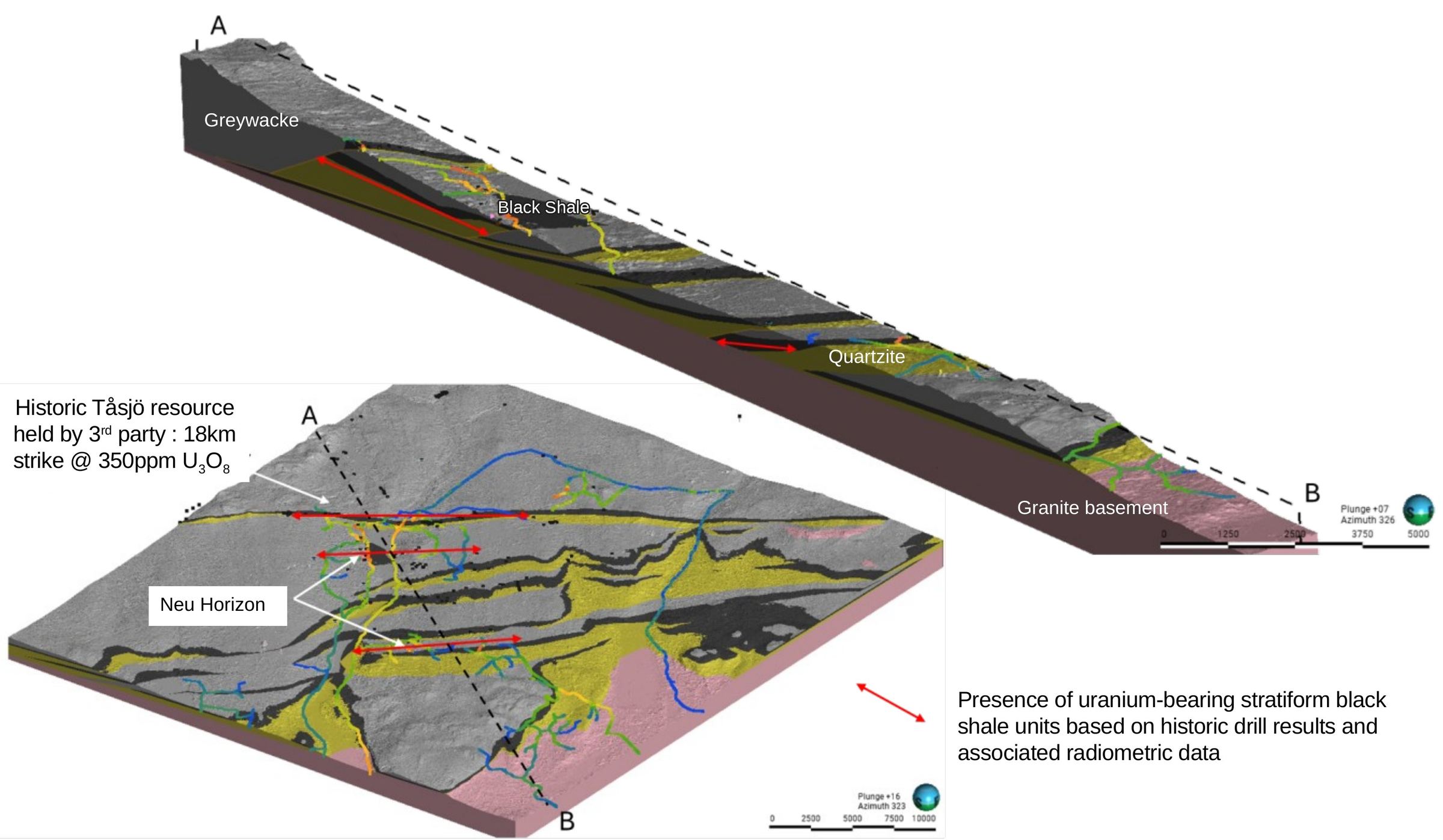
The target is stratiform-type black shale mineralisation, with Sweden’s Viken deposit providing a geological analogue. The Swedish black shales host the world’s largest undeveloped uranium deposits. At Vilhelmina, thin-skin thrusting at the eastern front of the Caledonide Orogeny caused tectonic thickening of the black shale units.
Geological analogue: Viken, Sweden (third-party)
Viken has a combined NI 43-101 Indicated and Inferred resource containing 1,676 Mlbs U3O8 at an average grade of about 162 ppm U3O8 (District Metals). Third-party, historical or foreign estimate, not reported in accordance with the JORC Code and not verified by Neu Horizon. It is context for the geological setting only and does not establish equivalent mineralisation on Neu Horizon ground. Source
What the historical work tells us
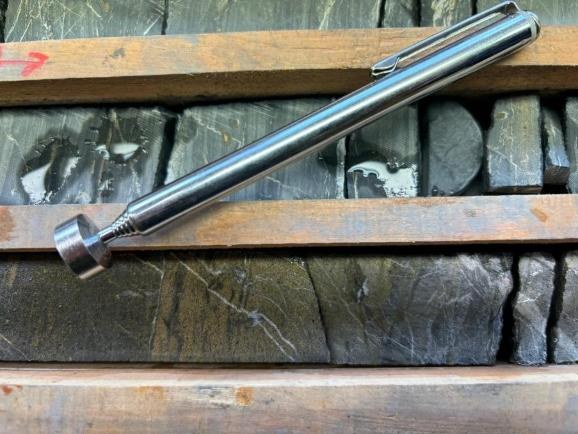
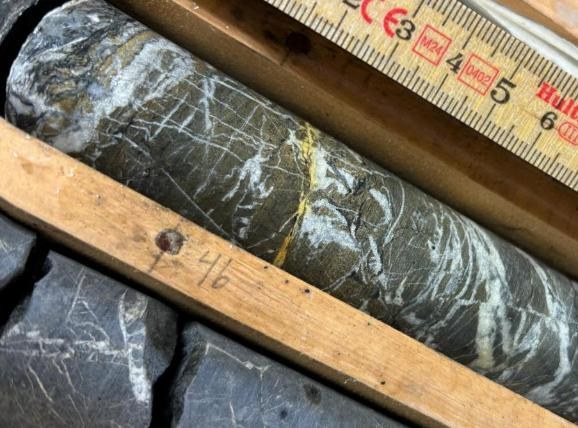
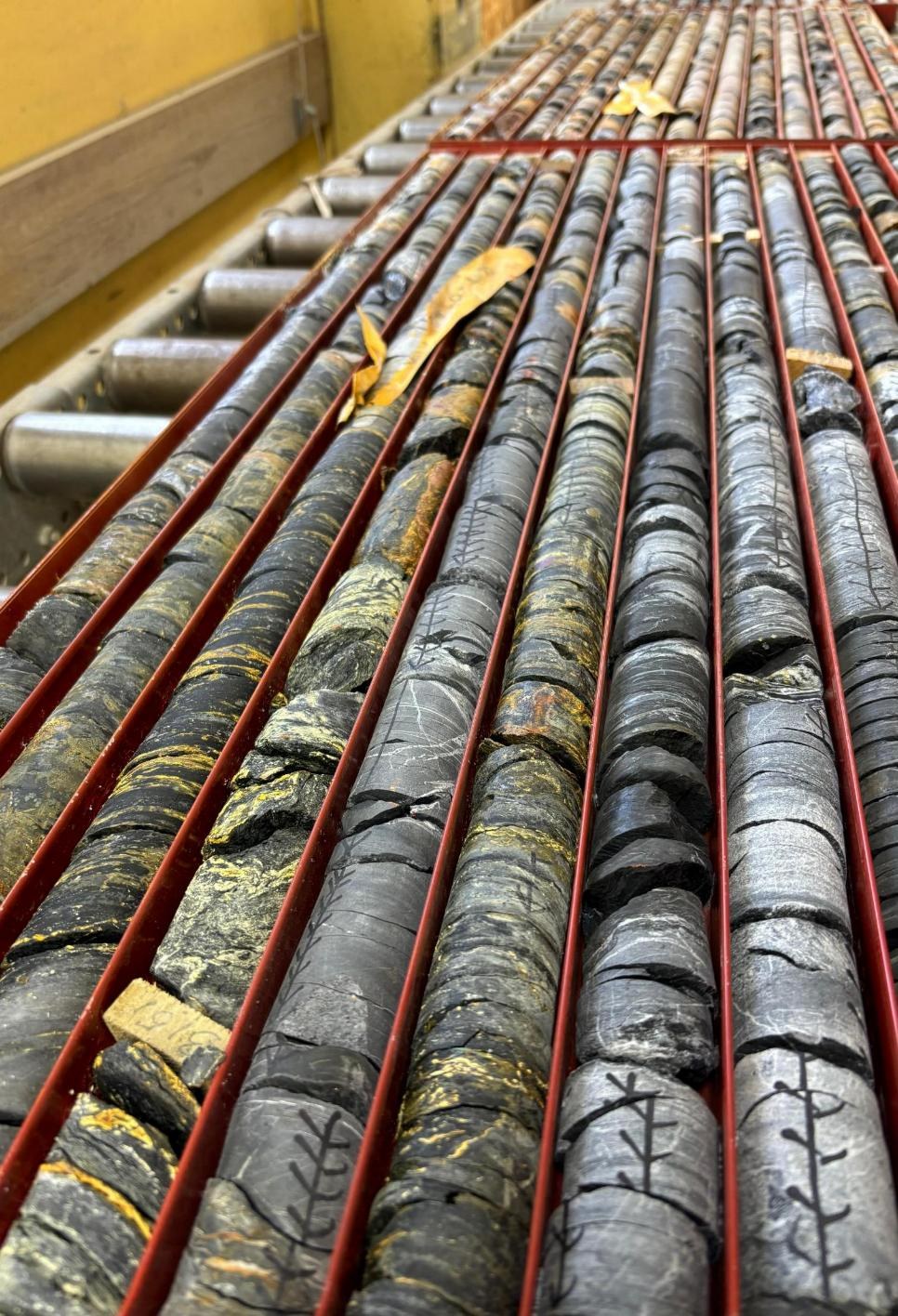
Across the wider Vilhelmina area: the area was first identified by AB Atomenergi in 1957, after anomalous uranium was found over roughly 20 to 30 km by 10 km. Drilling by AB Atomenergi (68 holes), Stora Kopparberg (7), SGU (38) and Vattenbyggnadsbyrån (41) brought the historical total to 154 holes and 8,005 m of core. Historical drill logs show uranium and rare earth elements enriched in the phosphate unit, with vanadium, molybdenum, nickel and copper enriched in the intercalated graphitic shale.
At the Brattremmen prospect: 12 historical drill holes intersected stratiform-type black-shale uranium mineralisation (historical results, not verified by Neu Horizon).
What we’re studying now
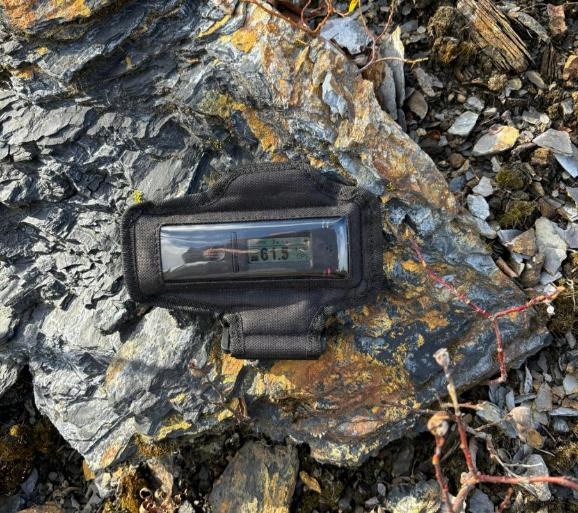
At Brattremmen, the integration and interpretation of historical (drill core) and new geophysical and field data (SkyTEM EM, carborne RS-230 radiometric data and rock-chip uranium results) has helped us to define high-priority targets. An Uppsala University program comprised of seismic surveys, core petrography and Raman spectrometry continues alongside, to assist with understanding the geological controls on the uranium mineralisation.
What the next phase could establish
Neu Horizon is finalising drill collars for a 1,000 m summer core drilling program at Vilhelmina, planned for Q3 2027 and subject to permitting. The drilling aims to test the continuity of the black-shale units and the structural controls on grade.
Source: Independent Technical Report, Dr Peter Siegfried (2026).
Mapping where the black shale is “hot”.
- Completed an extensive car-borne radiometric survey over all 7 Vilhelmina Exploration Permits. Survey data was integrated with historical drill logs and drill radiometric data to create an updated 3D geological model of the Exploration Target.
- The results indicate that although the black shale units are prevalent throughout Neu Horizon’s Exploration Permits, only certain parts of the black shale units are elevated in uranium (“hot”) and there appears to be an important structural control on the mineralisation that was previously overlooked.
- Preliminary findings suggest that during thin-skinned thrusting at the Caledonian Front, the black shale units were repeatedly thrust and tectonically thickened over parts of Neu Horizon Exploration Permits.
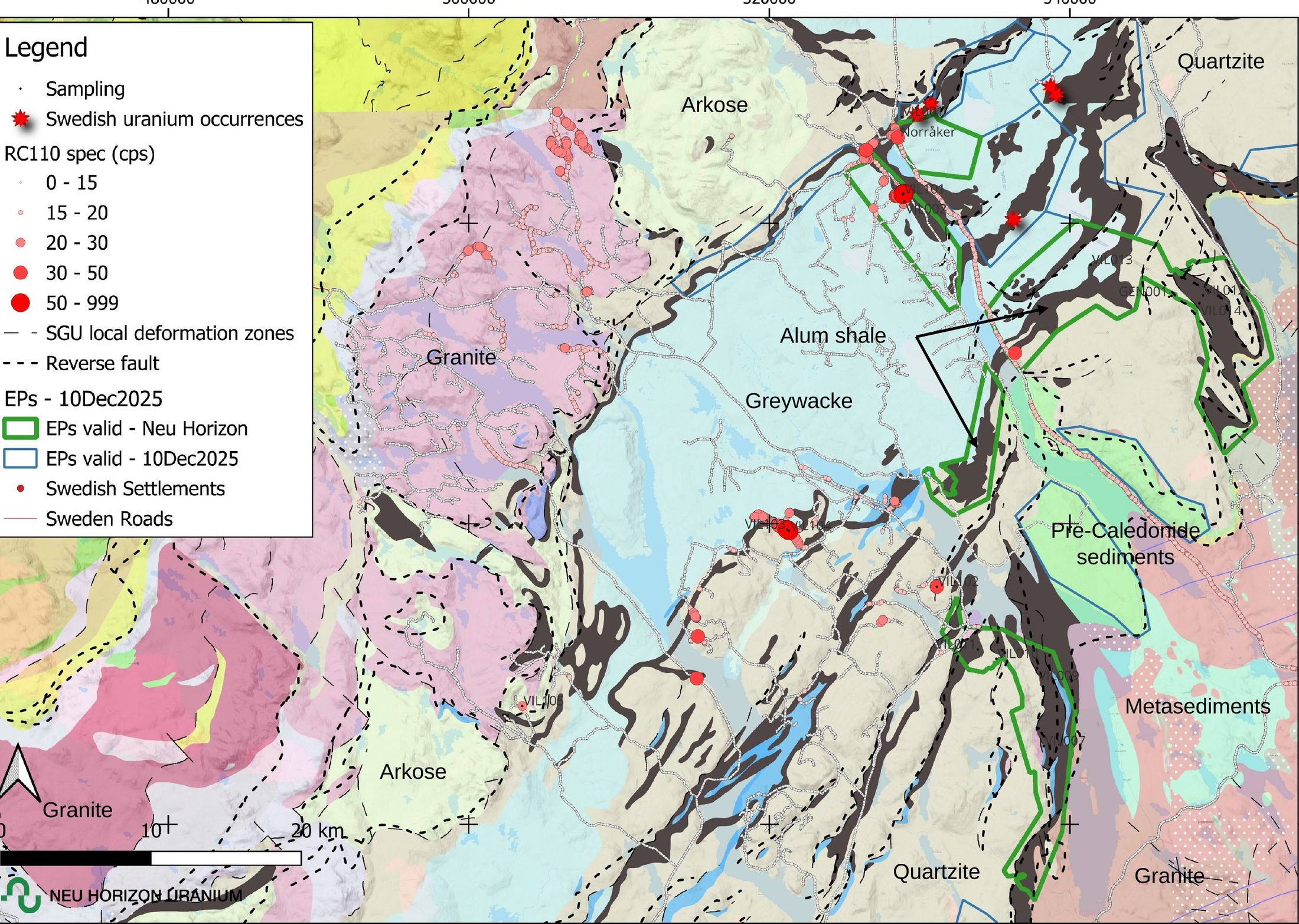
Spectrometer work at surface and in core.